supplementing

Paced Bottle Feeding: Part 2

Bottle feeding. While we are here to promote and encourage skin-to-skin breast/chestfeeding we also know it’s a practicality that most babies will have a meal through a bottle.

Bottle feeding is a whole different ballgame than breastfeeding and requires some different skills. Breasts and bottles behave very differently!

Let’s look at some tips and tricks to help your baby bottle feed with comfort and with ease.
Slow down the pace.

You may have heard of paced bottle feeding. This is a feeding technique which slows down the flow of milk and is response based. We pay attention to how our baby is acting throughout the feed. Are they furrowing their brow? Do they look super focused while they gulp gulp gulp?
These are stress signs during a feed and baby is telling you with their body language that they need a break.

The bottle can be tipped down and rested on the lips while baby catches their breath and gets ready to start the suck-swallow-breathe pattern again.

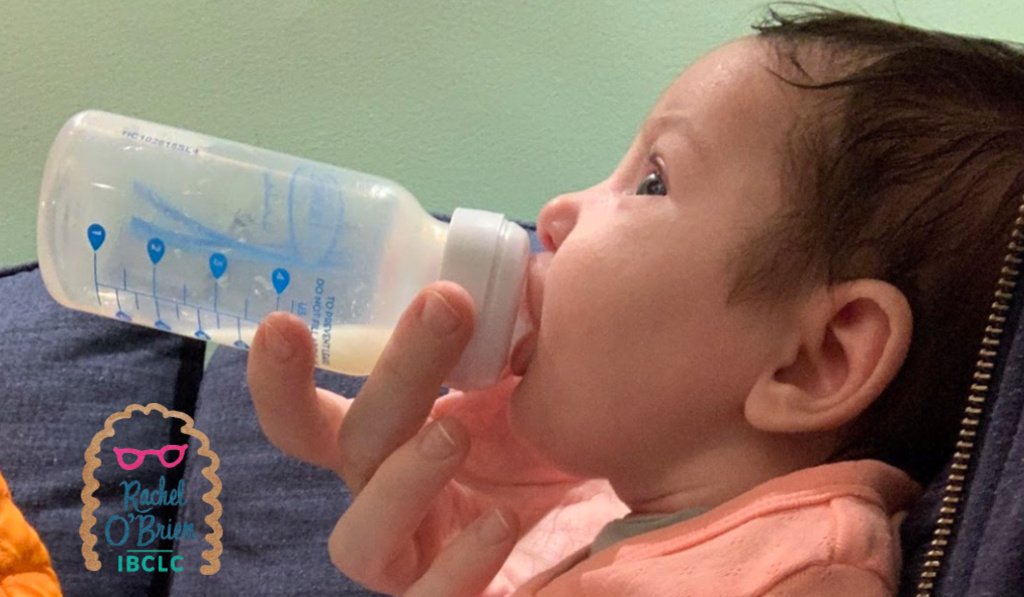
Look at the baby in the picture. What do you notice?

She is sitting is upright. This helps baby to regulate their feeding and it slows down milk flow compared to an angled bottle.

Her lips are out and have a good seal on the nipple. She’s almost touching the ring with her lips.
Her cheeks look relaxed and in general she looks pretty chill. This is exactly what we are going for.

So why else might we want to use paced bottle feeding?

It can prevent reflux and spitting up.

Babies who are gulping in milk quickly have a tendency to swallow air, too. Their tummies become overfull and they will often spit up or act uncomfortable and squirmy. The sphincter, which is a little “rubber band”, at the top of the stomach is immature in infants until they are about 6 months so it’s really easy for milk to come back up.

Reducing the air in the stomach can help prevent reflux and overfeeding which are the main reasons little babies have spit up.

It prevents overfeeding.

Okay, so overfeeding can cause spit up or even make reflux worse and it causes parents to worry about milk supply. Most people make all the milk their baby will need but if baby is chugging down a big bottle without any breaks, they can easily overfed. This makes it hard to keep up on the pumping! Babies rarely need more than 4 oz for a feed (maybe 5oz occasionally). Feeding more than that actually stretches their stomach beyond normal capacity.

A slower feed also helps babies suck for longer which is super comforting. Sucking regulates stress hormones, breathing, heart rate, and helps baby transition to deep sleep. Slow down that bottle and you will have a calmer baby!

It can prevent gas!

Just like swallowing air can cause spit up, the same is true for the downstairs. Gassiness is just a part of life for humans but it shouldn’t be painful or cause colic-like behavior.
Paced bottle feeding can help prevent these discomforts.

Ready to give it a try? Here is the lowdown on how to do paced bottle feeding.

Part 1 here!

Megan Dunn, IBCLC

breastfeeding, milk supply

Why I don’t recommend lactation cookies

Over the last few years it seems like everyone is jumping on the lactation cookie trend. New pre-made products have been popping up online and in stores all with strong claims about how they will help.
I love a cookie as much as any one (warm oatmeal or spicy snickerdoodle…yes, please!) but I don’t recommend them as a Lactation Consultant for milk production.

Image: Betty Crocker

This is for a few reasons. I have noticed that lots of my patients come to me already trying to take herbs and alter their diet to support milk supply. They invest hundreds of dollars sometimes without really knowing the exact cause of their milk supply problems. Often the issue is low milk supply perception without an actual issue but when there is a problem, it needs to be addressed by a medical provider who can investigate the source and give you personalized recommendations.

Different problems need different solutions.

A thorough assessment and history taking can often pinpoint the problem and then we can give you the right “medicine” for what’s really going on. Otherwise, it’s like throwing a dart in the dark. It might hit the target, it might get close, but it’s probably just a random shot.

Milk supply is governed by milk removal. When we take supplements to boost our milk supply there may be some effect but it might also temporarily boost our supply without setting us up for good long term habits. At the beginning, prolactin hormone brings in our supply and transitions milk from colostrum to mature milk. Oxytocin hormone is the main reason that milk sprays and drips out. Over time, our breasts become less sensitive to these hormones and what we need for continued supply is a baby who can breastfeed well!

Which brings us to the next issue. If we take herbs or eat cookies that artificially boost our supply it can mask baby feeding problems. If your baby’s suck is weak or uncoordinated, I want to know that right away and get you on the path to healing! We can work with suck training, a physical therapist, or occupational therapist to make sure your baby is thriving. We don’t want to miss those early signs .

Homemade baked goods are about the most delicious thing I can think of but sometimes the ingredients might actually lower supply. Many recipes call for a fair amount of sugar so if the milk supply problem is created by insulin resistance it won’t be supportive. Some of the other herbal ingredients might also lower supply. Some of the most common herbal ingredients for milk supply are not compatible with the medical conditions which are most likely to impact supply!

And lastly, I think it’s important to consider that we do not need to eat a special or different diet while breastfeeding. Our milk can be plentiful and super healthy following standard recommendations for adults. Our diets may need to be altered for medical reasons and if so, ask your provider to help you come up with a plan. Many of the ingredients in lactation cookies are expensive and hard to find. I’d rather see you snuggled up in bed nibbling on a grocery store oatmeal cookie than driving from store to store for specialty ingredients.

As always, take what works for you and leave the rest behind. Know that this Lactation Consultant won’t judge or tell you what to do. We are here to support you. And if you sister or kind neighbor brings you lactation cookies, feel free to eat them if they work for you and you want to. Just know you don’t *have* to eat them to make lots of milk.

If you are experiencing low milk supply check out our local Lactation Consultants for support and up-to-date information.

<3Megan Dunn, IBCLC