breastfeeding, supplementing

Paced Bottle Feeding

What is Paced Bottle Feeding?
Paced Bottle Feeding is a method of bottle feeding that allows the infant to be more in control of the pace of the feeding. This method slows down the flow of milk, allowing the baby to eat more slowly and take breaks. Paced feeding reduces the risk of overfeeding that may result in discomfort to the baby. This feeding method is recommended for any baby that receives bottles.
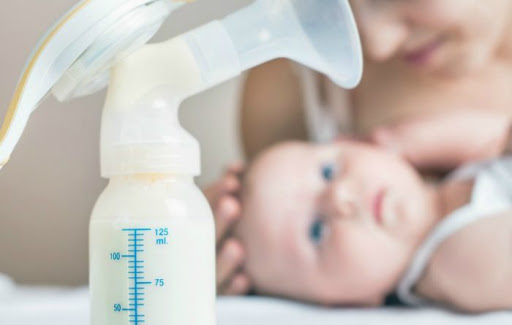
Many parents are worried about baby swallowing air or getting gassy with bottle feeding. The old-school way of bottle feeding often increases gas and air swallowing because the flow is simply too fast! Baby doesn’t have time to follow their suck-swallow-breath pattern and ends up accidentally swallowing air.

Just like you and I take breaks when we are drinking, baby needs them, too. Using a slower paced feeding method also teaches parents to recognize baby’s communication cues. Overall, the feeding is a lot more pleasant for everyone!

Caretakers and grandparents may need a refresher on how to give bottles in a way that respects baby’s needs. There are lots of videos on YouTube, Vimeo, etc which show how to do paced feeding. They all vary a little but this is how I teach it:

Paced Bottle Feeding Steps:
1. Choose a small, 4 oz. bottle and a slow flow nipple. Pick something baby can latch onto deeply, with fully flanged out lips.
2. Hold baby in your lap in a semi-upright position, supporting the head and neck.
3. When baby shows hunger cues, touch the nipple to baby’s lip so he opens his mouth wide.
4. Insert nipple into baby’s mouth, making sure the baby has a deep latch with the lips turned outward.
5. Hold the bottle flat (horizontal to the floor).
6. Let the baby begin sucking on the nipple with the bottle angled just enough to fill the nipple about halfway with milk.
7. Watch baby during the feeding: cues that baby may need a break can include leaking milk, hands held with the fingers wide apart, a creased brow, wide open eyes that look startled, gulping, or clicking noises
8. Every 2 minutes or if you notice any stress cues, tip the bottle down and remove it from baby’s mouth keeping the nipple just touching baby’s lips.
9. After a few seconds baby will try to latch back onto the nipple.
10. Continue this Paced Feeding until baby shows fullness signs – no longer sucking after the break, turning away or pushing away from the nipple.

After several days of Paced Feeding, babies often start to learn to pace on their own. You will notice them taking their own breaks, and then returning to feeding. Positioning the baby upright and holding the bottle in a flat position helps babies be in control of their own feeding.

Part 2 here!

Megan Dunn, IBCLC

breastfeeding

Does my baby need water on hot days?

No!

Baby does need to breastfeed often and keep cool in a shady place though. Baby may want to breastfeed more often during very hot weather. Offer unrestricted access to the breast to keep baby hydrated.

Your milk will adjust and increase water volume to keep baby well hydrated if you feed as often as baby wants.

Signs of dehydration to watch out for:

  • Urinates less frequently (for infants, fewer than six wet diapers per day)
  • Parched, dry mouth.
  • Fewer tears when crying.
  • Sunken soft spot of the head in an infant or toddler.

If baby exhibits any of these symptoms contact their doctor or visit the hospital right away.

The American Academy of Pediatrics (AAP) recommend keeping newborns and infants younger than 6 months out of direct sunlight. The best protection from the sun for these infants is to stay in the shade. Look for shade under a tree or bring an umbrella or sun-blocking tent for outdoor play.
In most cases, infant’s skin is too sensitive for sunblock so your best bet is to stay indoors or keep baby completely shaded.

breastfeeding, milk supply

Top 3 Things To Do for Breastfeeding Success

  1. Start hand expression at 36 weeks if you are not at risk for preterm delivery

This builds up hormone receptors which help you to make the most milk!  It also gets you familiar with the technique which is super helpful to do at least 5 times a day after birth (for the first 2 weeks).  If you hand express into a clean container you can store the colostrum (early milk) in the freezer and bring it with you in case your baby needs a supplement after birth.

2. Golden Hour

Hold your baby skin-to-skin after delivery until baby has had their first meal.
It takes time to adjust to the outside world!  It’s so bright and loud and cold!  Let baby find their way to the breast and attach on their own –they can do it if we give them time.
Our bodies are also primed from labor to transfer the most colostrum in the first few hours, so make the most of it!

3. Have a Nursing Marathon for 3 days after birth

Feed often (at least 10 times per 24 hours) especially when baby is awake and calm, hold baby skin-to-skin as much as you can, and do hand expression at least 5 times per day after feeds.  This tells your body to make lots of milk and helps prevents swelling (which is also called engorgement).
Keeping baby close by will help everyone rest and recover. Snuggling baby often also reduces crying!

Megan Dunn, IBCLC

Diabetes, galactagogues, milk supply

Breastfeeding with Diabetes and/or PCOS

Many people with diabetes and gestational diabetes meet their breastfeeding goals but others may experience challenges with their milk supply and/or delays in developing a full milk supply. Insulin is an essential hormone for full milk production and luckily there are many things we can do during pregnancy and postpartum to support our bodies and meet our breastfeeding goals.

Working with your Registered Dietitian and a Lactation Consultant as part of your health team is helpful for creating a plan that works well for your individual needs.

Nutritional Supports During Pregnancy and Postpartum:
Fiber!  Oats are a really excellent source of fiber and they can help you feel full longer as well as stabilize your blood sugar.  Try adding a handful into a morning protein smoothie.  Your Dietician can share many other recipe ideas that might work for you. Quinoa is another great choice for protein and fiber!

B12 is a necessary vitamin that we get from animal sources. It gives us energy and maintains our nervous system.  Getting adequate B12 from meat, fish, eggs, cheese, milk, and some fortified whole grain cereals throughout your pregnancy and postpartum period will support milk production.

Vitamin D is very important for lots of functions in our body.  It supports our immune system, maintains healthy bones, and is supportive of our mood regulation.  You’ll find it in milk, egg yolks, salmon, tuna, and in some fortified whole grain cereals.  Be sure to get your recommended daily amount!

Calcium and Protein from dairy-free sources may be advised. Salmon, tofu, dark green leafy veggies, nut butters, and grass fed meat are good sources.

Other foods and herbs
Cumin – anti-diabetic, enhances mammary growth
Dill – works best with other herbs, supports insulin, diuretic (helps with swelling and engorgement)
Fennel – anti-androgenic, digestive support, diuretic
Myo-inositol – natural sugar found in citrus fruits, cantaloupe, and some beans which regulates blood sugars, can also be taken as a supplement

Herbs to support milk production
Each herb does a different job; there is no one size fits all. Below are some common herbs for insulin resistance shown to support milk production

Goat’s rue taken during the 3rd trimester and for the first 6 weeks can encourage glandular growth (the milk making cells).  You can find it in drops called tinctures or in capsules. Vitex or Chasteberry is an herb commonly used for hormonal regulation.  It can also be taken during pregnancy and postpartum.

Discuss the use of these herbs with your provider to determine which is right for your circumstances!

AVOID fenugreek.  This herb is found in lots of lactation blends but it’s not an appropriate choice for people with diabetes as it affects your blood sugar and reduces the absorption of other oral medications.

Milk expression
If you are not at risk for preterm delivery, milk expression during pregnancy is a good idea.  Not only does this stimulate for better long term milk production but you can freeze your colostrum and have it available after delivery if baby has hypoglycemia (low blood sugar).  This decreases the chance that your baby will need donor milk or formula.  Talk with your IBCLC about how to safely do this.

Megan Dunn, IBCLC

BLOG POSTS

Do I have enough milk???

Up to 80% of breastfeeding parents believe they have low milk supply. And while people do truly struggle with milk supply issues, it’s also true that only about 5% or less suffer from primary lactation insufficiency or a physiological inability to produce enough milk (usually because a health condition).

Milk supply issues can happen due to a secondary cause like a premature or complicated birth.  These situations can make it harder to establish a full milk supply right away. This doesn’t mean your breasts can’t make enough milk ever. It just means that they aren’t making enough milk right now—often we can fix these issues!

After many years as a Lactation Consultant, the majority of low milk supply concerns I see are actually non-issues.  That’s to say, parents feel like their milk supply is low but there’s no evidence that’s the case.  Often this occurs because we haven’t fully learned what our babies are communicating to us.  We think if our babies cry or fuss there might be something wrong with our milk! And it has a lot to do with how we feel about our bodies and how much we trust things to go well.

Perceived low milk supply is the number one reason breastfeeding parents give for why they stopped breastfeeding.  Figuring out what’s really going on can be tricky because it’s not just you but also your baby in the picture.  So milk supply has to match up with baby’s ability to eat well.

My baby cries and fusses often so my supply must be low…

Babies cry for lots of reasons!  As parents we are quick to blame ourselves and worry that we don’t have enough milk or that something in our milk is bothering our baby.  Most babies who aren’t getting enough are actually very sleepy.  They are difficult to wake and have a hard time staying awake for a whole feeding.  They are quiet, “good” babies.

Babies often have periods of fussiness related to gassiness, overstimulation, or just common evening crying.  Snuggling your baby close, skin to skin can help soothe some of these discomforts. Alternately, hold your baby in a carrier or sling and go for a walk.  The motion and change of scenery may help!

My baby wants to eat more often than every 2-3 hours…

Newborns who are fed responsively will feed on average 12-14 times in a 24hr period.  Older babies and bottle fed babies do this sometimes, too!  It’s normal to have increased feeding times at 4-6 weeks and 16-18 weeks.  It’s also normal that your baby will cue to feed for soothing and snuggles.  Touch and suckling are strong needs for baby and they are satisfied by breastfeeding.

My baby will take a bottle after breastfeeds so they must still be hungry

In the early weeks, suckling is a reflex.  A bottle nipple stimulates the right spot on the top of baby’s mouth and they suck reflexively.  The bottle nipple also drips which causes baby to swallow.  When they swallow the nipple releases more milk…and then you are in a cycle!
Babies also love to suck for comfort.  So they are willing to take more if it’s offered.  This can cause overfeeding which results in spit up and gas and that can cause more fussing!

I can’t pump as much as my friend so I think I’ve got low supply

On average, a pumping session without prior breastfeeding will yield 3-4oz (or about 1-1.5 oz if you’ve just breastfed).  More than that can be normal but it’s not necessary.  Baby’s stomach can only hold about 4oz. 
Also remember that milk flow comes from oxytocin (that lovey, warm hormone you get with skin to skin) and oxytocin isn’t as high with pumping as it is with your sweet, cute baby. 

Your Lactation Consultant can help you find the right pump for you and make sure you have a good fit and a pumping plan that works for your needs.

My breasts don’t feel full anymore.  I think I lost my supply.

In the early days our breasts can feel *very* full and heavy.  Lots of that is from milk but even more of it is from fluid retention (which can also cause our hands and feet to swell).  As that extra fluid is passed, our breasts get softer.  They also start to respond to what your baby needs so they tend not to get overfull after a few weeks.

For many people, anywhere from 1.5-3 months is when they notice these changes.  It can often coincide with returning to work and increased pumping sessions (see above). 

The best indicator for a sufficient milk supply is to look at your baby. 

Is your baby happy most of the time? 
Do they have some alert times during the day? 
Are they making daily bowel movements and lots of wet diapers? 
What about weight gain?  If they are gaining 5-7oz per week in the first few months then they are doing great!

If you ever have concerns, drop in for a weight check at your local breastfeeding group or schedule a visit with a Lactation Consultant.

Here is a list of local providers and breastfeeding support groups:

Resources – Linn Benton Lincoln Breastfeeding Coalition

Megan Dunn, IBCLC